
Office Noise Reduction Cost-Benefit Analysis: How to Justify an Acoustic Budget to Finance
The finance director's question is always the same, and it is fair: what do we get for this? "A nicer office" does not survive that question. An office noise reduction cost-benefit analysis does, because it converts the acoustic project into the language finance actually uses — hours recovered, assets retained, construction avoided, and a claim you can check after installation. Here is how to build that case in one page, with numbers you can defend rather than adjectives you cannot.
Start with the hours, not the decibels
The first line of the case is attention, and it can be modelled without inventing research. Take your own floor as the unit. Suppose a 50-person open office loses two avoidable interruptions per person per day to chatter, calls and movement — an assumption you can test by counting for a week. If each interruption costs even fifteen minutes of degraded recovery, that is 25 person-hours a day, or roughly three full-time employees' worth of work dissolving into the ceiling. Label it as your scenario, not as a measured finding. The point is that the assumption is conservative and checkable, which is exactly what finance wants: a model built from your own floor, not a percentage copied from a vendor's slide.
One habit makes the model much harder to argue with: run it three ways. A conservative case where only one interruption a day is avoided, a base case with two, and an optimistic one with three. If the project only works in the optimistic case, say so and shrink the scope. If it works even in the conservative case, you have a decision rather than a debate. Finance teams do not expect certainty from an acoustic project; they expect to see where the argument breaks. Show them that point and you will be believed.
The second line: furniture you keep vs construction you abandon
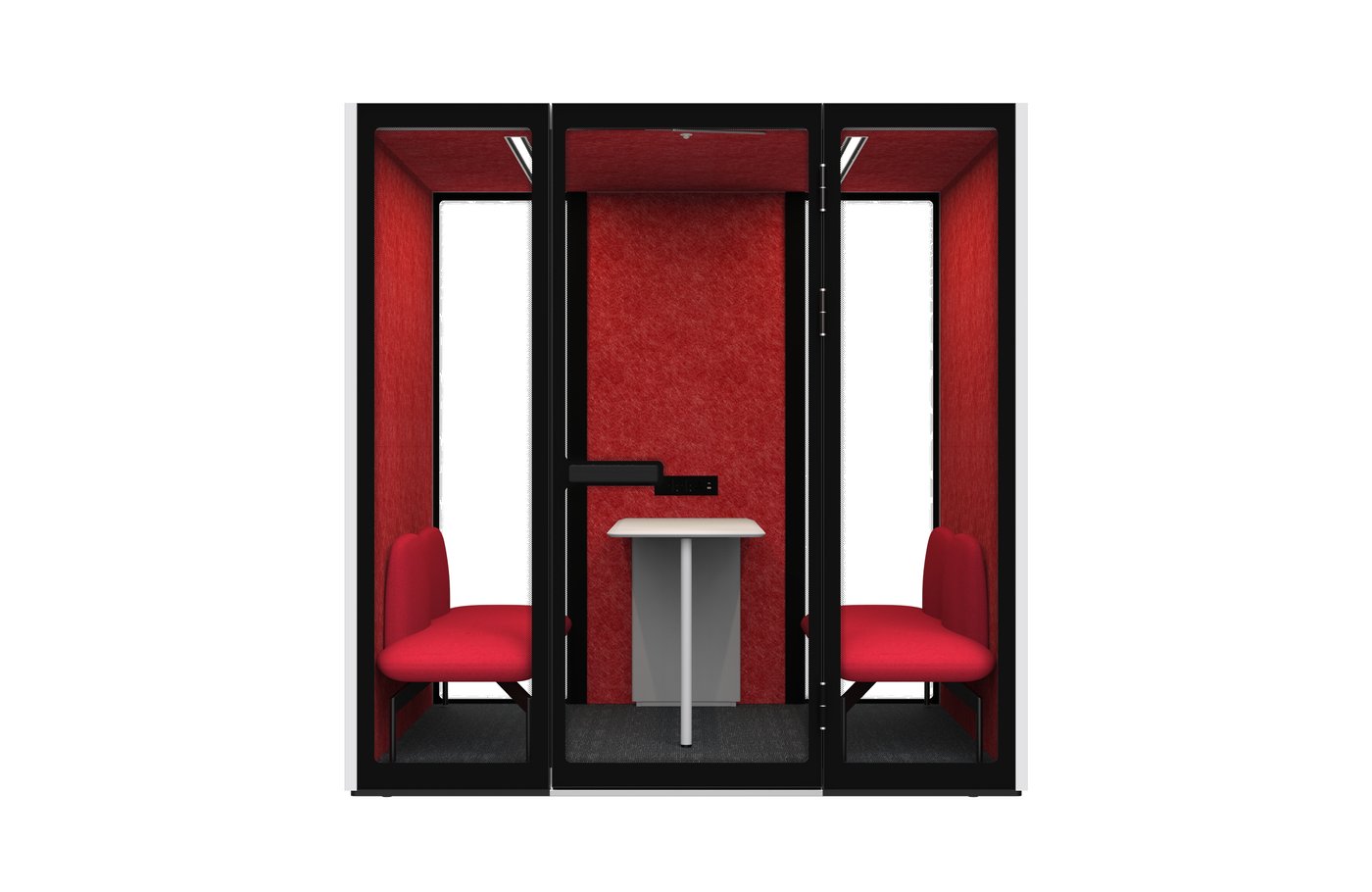
An acoustic project has an unusual advantage over the obvious alternative. Building quiet rooms means drywall, permits, downtime and a reinstatement clause when the lease ends — capital that belongs to the landlord the day it is finished. Pods, panels and screens are furniture: they move with you, they can be re-sold or redeployed, and they carry their tested ratings with them. When you compare the two routes in the same model, include the exit cost of construction as well as the entry cost. A meeting room that has to be demolished at the end of the lease is not a cheap meeting room; it is two projects.
The lines finance usually misses
Three more entries belong in the model. Errors and rework: distraction does not just slow work, it degrades it, and mistakes cost more than minutes. Retention and recruitment: people leave noisy employers, and a workplace with genuine quiet zones is a hiring argument as much as a comfort one. And avoided downtime: construction on a live floor costs days of disruption, permits and management attention, none of which appear in the builder's quote. None of these need a precise number to be real; they need a line in the model and an honest estimate next to it.
Build the case in one page
One page, five rows. Your floor size and headcount. Your assumed daily interruption loss, stated as an assumption you will test. The value of an hour of your team's work — finance already has this number, and if not, the average loaded salary gives it to you. The scope of the acoustic project, broken into the three layers: absorption at ceiling and walls, division at desk height, enclosure for calls. And the comparison with construction, including exit costs. When the page is built from your own assumptions, it survives the meeting. When it is built from a vendor's percentages, it does not.
What to measure before and after
The case does not end at approval. Take a baseline before anything arrives: count headphone wearers, corridor calls and empty desks at two fixed times a day for a week. Then measure the same three counts thirty days after installation. Those are your before-and-after numbers, and they are what turns the acoustic budget from an act of faith into a documented result. If the second count shows fewer corridor calls and fewer people wearing headphones to think, the model has been validated on your own floor — and that is the version of the story finance will remember at the next budget review.
BG Acoustics supplies the three layers as a responsible partner backed by BG Office Furniture — Foshan, since 2015, audited production lines, more than 50 export countries, OEM/ODM from 10 sets. Tell us your floor size and your current complaint and we will help you build the one-page model with the right products in each layer: emmy@fsbige.com or WhatsApp +86 189 2856 2556. And if you are near Foshan, the showroom at B36-1 Jianshe Road, Lecong, Shunde is the working example — bring your assumptions and we will walk the space with you.