
How Office Pods Are Made: Steel, Felt, Foam and Glass — the Layer-by-Layer Build of a 30 dB Pod
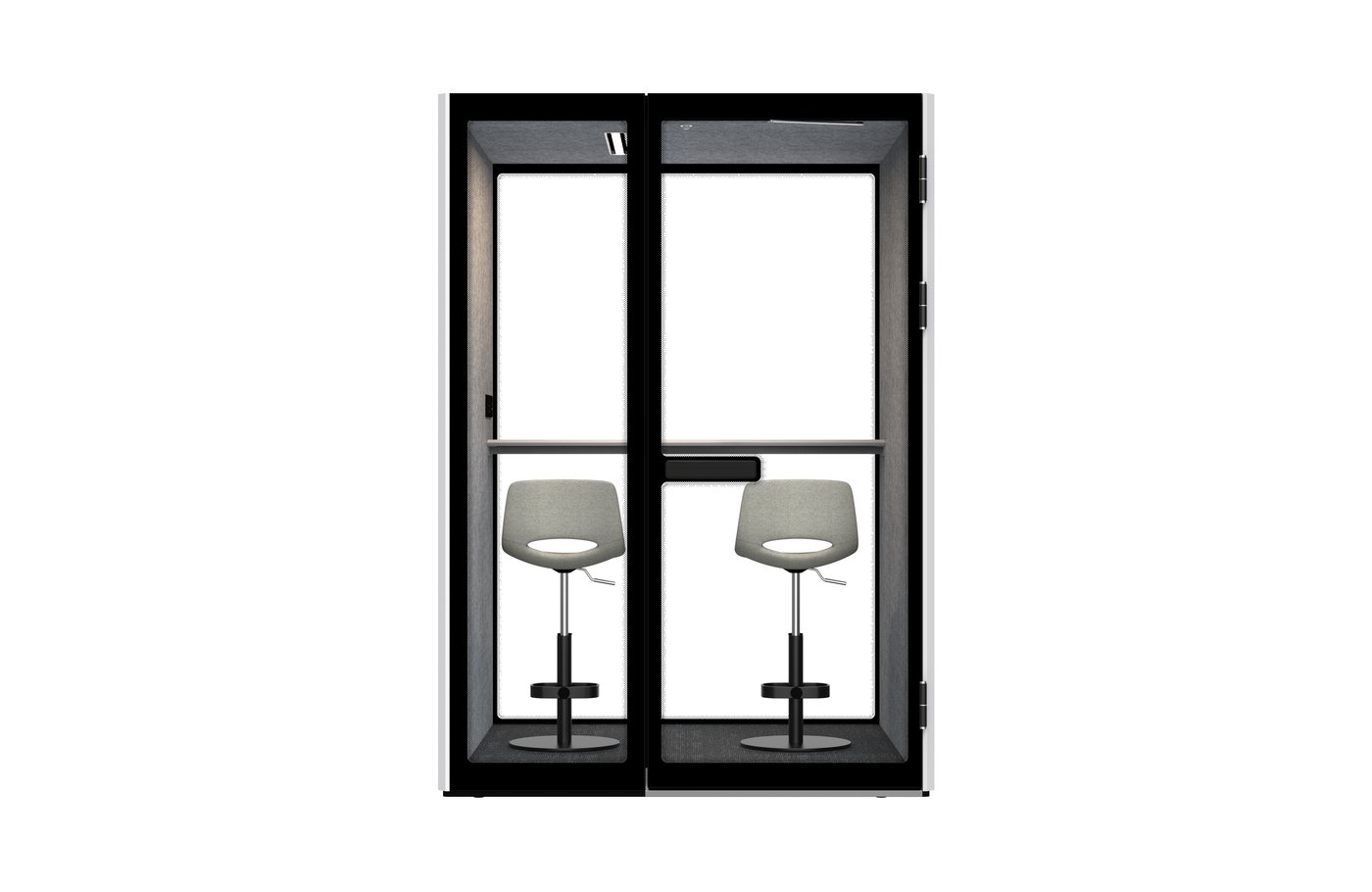
Ask someone what an office pod is made of and the honest answer is: it depends which part you mean. The frame is one material, the wall is four, the glass is a fifth, the seals are a sixth, and the air inside is an engineered system in its own right. A pod that earns a 30 dB rating is not a product of one clever material; it is a stack of ordinary materials doing one job each, assembled so precisely that nothing leaks. Here is the layer-by-layer build of a serious pod — the same build you can inspect when you visit a showroom or ask a supplier for the construction sheet.
The frame: aluminium, steel and why tolerances matter
Start with the skeleton. The Comine 2026 series uses a precision aluminium frame at 1.5 mm, with 1.0 mm powder-coated steel panels on the outside. That combination does two things: it keeps the box rigid enough to be moved as modules without going out of square, and it gives the door a true frame to close against. A pod can have the best acoustic wall in the world and still fail at the door if the frame flexes a millimetre out of true. When you inspect a pod, open and close the door a few times. If the latch lands cleanly every time, the frame is doing its job.
The wall, layer by layer
Now the part that makes it acoustic. The multi-layer wall runs steel on the outside, then acoustic felt, then foam, then a 12 mm PET felt finish on the inside. Each layer has a distinct role. The steel provides mass and a hard outer shell — sound that hits it is mostly reflected, which is the first barrier. The felt and foam provide damping and absorption inside the wall, so the energy that does get in is dissipated rather than transmitted. The PET interior finish is the surface you touch and see: it absorbs at ear height and gives the inside its quiet, matte look. It is not one material being clever; it is a mass layer and an absorption layer working in series. This is why a pod is heavier than you expect — 328 kg for the smallest phone pod, 495 kg for the solo work pod — and why a lightweight demo pod at a trade fair usually sounds like a tent.
Glass and door: where most pods lose the rating
The door is the largest single opening in the box, and it is where ratings are won or lost. On the 2026 series, 6 mm tempered glass and a solid-wood handle with a magnetic close. On the steel series, 4+4 mm laminated explosion-proof glass and a refrigerator-grade magnetic door seal. Two different answers to the same question: how do you close a hole in an acoustic box without creating a leak path? The seal is not a detail — it is the detail. A magnetic seal pulls the door shut against the frame every time, with the same contact line, so the door does not become the weak point in an otherwise well-built wall.
The interior: carpet, light and the small systems
Inside, an 8 mm anti-static carpet underfoot and 60% PET acoustic interior on the steel series, so the inside of the pod does not echo at you while you talk. The lighting is a 5000 K LED strip, flicker-free and dimmable, which matters more for video calls than most people realise — bad light makes you look tired on camera. A touch panel gives you light, fan, universal socket, USB and Type-C. And a motion sensor switches light and fans on when you step in and off when you leave, so the pod is never running empty and never needs a switch to be remembered.
Ventilation and power: the layer you cannot see but cannot skip
The last system is the one that decides whether the pod gets used at all. Top-in top-out silent ventilation, adjustable speed, from 70 m³/h in the phone pod up to 560 m³/h in the six-person meeting cabin. Air enters at roof level, flows around the occupant and exits upward, so there is no draft on your face during a forty-five-minute call. The whole unit runs on 110–220 V worldwide with a 2 m external cable, which means the same pod ships to Riyadh, Paris or São Paulo without modification. Optional silent casters let you move it across the floor; an optional smart lock controls who gets in.
Why this matters when you buy
A pod is a system, not a panel. When you compare two quotations, ask for the construction sheet and check the layers by name: frame thickness, wall build-up, glass type, door seal, ventilation figure. If any of them is missing or vague, you are buying a photo. The construction described above is what you can inspect in person at the showroom at B36-1 Jianshe Road, Lecong, Shunde, Foshan — open the door, look at the seal, listen to the fan.
BG Acoustics supplies these pods as a responsible partner backed by BG Office Furniture, working with audited production lines in Foshan since 2015, shipping to more than 50 countries, with OEM/ODM from 10 sets. Ask for the construction sheet and the ISO 23351-1 report with your quotation: emmy@fsbige.com or WhatsApp +86 189 2856 2556. And if you are near Foshan, come and test the door seal yourself — it tells you more about the pod than the brochure will.