
Acoustic Lighting for Open Office Noise Reduction: One Fixture, Two Jobs
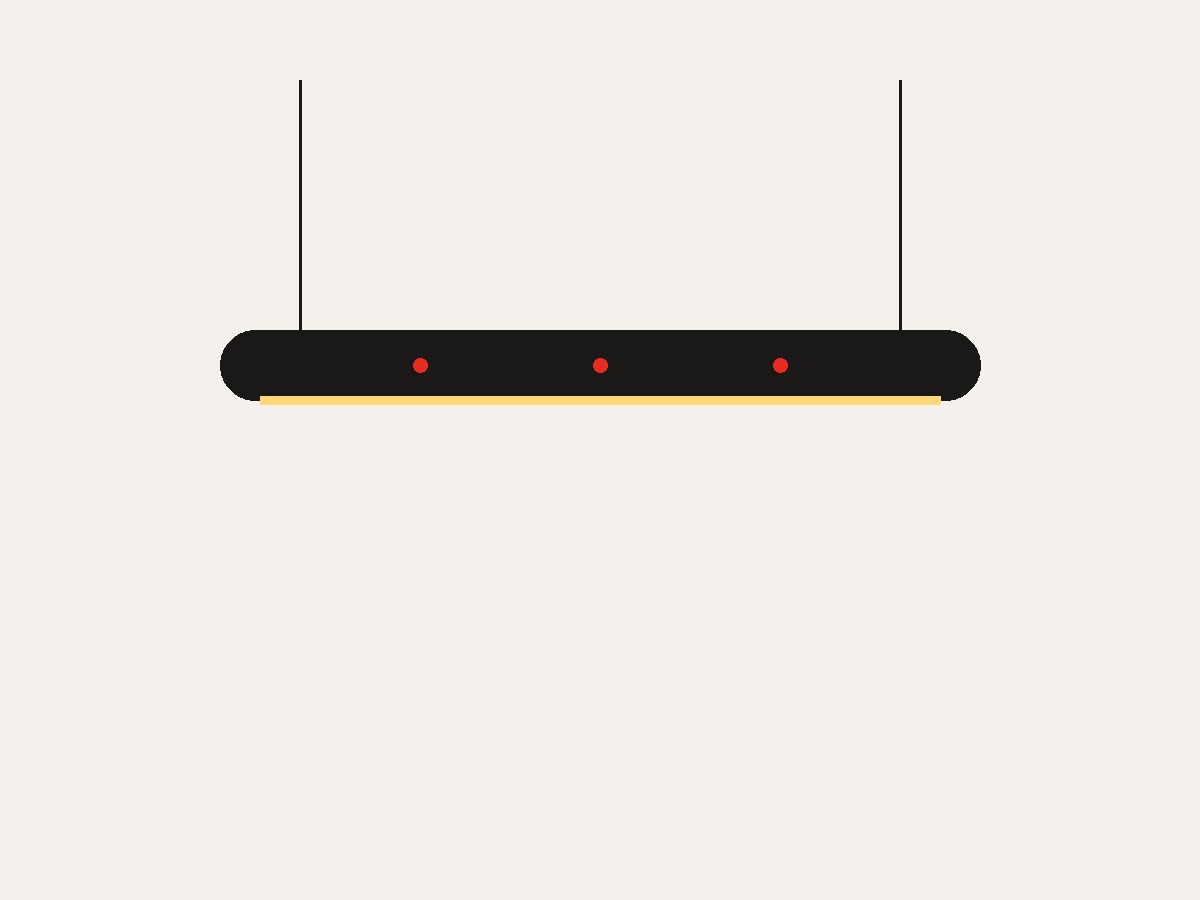
Every open office has the same invisible problem overhead. The ceiling — the largest single surface in the room — is usually gypsum, concrete or metal deck, and it reflects nearly all the speech energy that hits it. Sound bounces off the slab, travels sideways, and lands on a desk thirty metres away as the background mush that makes focus impossible. Meanwhile the same ceiling already carries hundreds of light fixtures that do nothing for acoustics. Acoustic lighting for open office noise reduction closes that gap with a simple idea: make the luminaire itself the absorber. This guide explains how it works, what NRC really measures, and where to hang what.
Why does the ceiling decide how loud an office feels?
Speech energy radiates upward and outward. In a room with a hard ceiling, the reflection off the slab is the main path by which one conversation becomes everyone's problem: the reflection arrives late enough to smear speech, raise the ambient level and push people to talk louder — which starts the cycle again. Acousticians measure a surface's appetite for sound with the Noise Reduction Coefficient, NRC: 0.00 reflects everything, 1.00 absorbs everything. Painted concrete sits around 0.05. Bare metal deck is barely better. Every square metre of hard ceiling is a mirror for noise, and an open office is made of it.
What does NRC 0.85 actually do in a room?
An NRC of 0.80–0.85 means the surface swallows roughly four-fifths of the speech-band energy that strikes it and returns only a fifth. Multiply that across dozens of fixtures hanging in the reflection path and the room changes character: reverberation time drops, speech stays local, and the cocktail-party crescendo never gets started. The point is not silence — it is stopping the ceiling from acting as an amplifier. PET felt, the material these luminaires are formed from, earns that absorption with millions of compressed recycled fibres; twelve millimetres of it hangs in exactly the plane where the reflections happen.
How can one fixture do two jobs?
The LUME series builds the absorber and the light into the same body. The housing is not a metal shell with a panel glued on; it is heat-formed PET acoustic felt, NRC 0.80–0.85, shaped into the luminaire itself — line, dome, ring, disc or baffle. Inside sits a specification-grade LED engine: 100 lumens per watt, colour rendering Ra ≥ 90, selectable 3000 / 4000 / 6500 K, with 0–10 V or DALI dimming optional, and 220 V with 3C certification. Nothing about the light is a decorative compromise. The felt also carries a full colour card, so the fixture can disappear into a scheme or mark a zone in a contrasting tone. The lume-line stretches L1200 to L1800 mm over desk rows; the lume-dome hangs D700 mm of absorber directly over a meeting table.
Where does each shape work hardest?
Match the geometry to the problem. Over benching and desk clusters, linear pendants shadow the workstations they serve — the lume-line family runs 1200, 1500 and 1800 mm. Over collaboration tables, a dome or a wide disc throws light down while swallowing the upward blast of six people talking at once — the lume-disc comes in D800 and D1000 mm with an edge-lit downward wash. Under exposed soffits, the lume-baffle spreads L1400 or L2100 mm of blade-like felt across the plenum. For corridors and reception walls, the lume-wall mounts L1200 × H600 mm of absorption with a light line at its base. And between the pendants, the quiet rooms still come from products/pods — absorption and enclosure solve different halves of the same problem.
How much coverage does an office need?
More than a token fixture per room, less than a blanket. A working heuristic among designers is to put Class-A absorption over roughly a quarter to two-fifths of the ceiling area in the noisiest zones — desk clusters first, then collaboration points, then circulation. The honest way to size it is a reverberation-time calculation from the room's volume and surfaces; a supplier who works in acoustics every day can run that from your floor plan and tell you whether ten pendants will do it or thirty. Ask for the calculation, not the catalogue.
What should you check before you specify?
Six items. One: the NRC test report — a range like 0.80–0.85, not an adjective. Two: efficacy in lumens per watt and colour rendering; 100 lm/W and Ra ≥ 90 is the line between a real luminaire and a felt ornament. Three: colour temperatures — 3000 / 4000 / 6500 K selectable covers lounge, desk and lab. Four: dimming protocol — 0–10 V or DALI — matched to your control system. Five: electrical certification for your market; the LUME range is 220 V with 3C certification. Six: the colour card, because the fixture will define the ceiling's look as much as its sound. When a quotation answers all six, the specification is safe. Browse the full family at products/lighting.
BG Acoustics is a responsible supplier backed by BG Office Furniture, established in Foshan in 2015, working with audited production lines and shipping to more than 50 countries, with OEM/ODM service from a minimum order of 10 sets. For a quotation with NRC reports and photometric files attached, message us on WhatsApp at +86 189 2856 2556 or email emmy@fsbige.com. And if you are near Foshan, visit the showroom at B36-1 Jianshe Road, Lecong, Shunde — stand under a dome and hear the difference.